BlackJack 21 - Online Casino
- 4.4
- Rating
- 5.00M
- Installs
- Free
- Price

 Analysis by App-foxy
I found BlackJack 21 - Online Casino easy to understand within minutes, but its real test is not the first few hands. Blackjack is familiar enough that almost anyone can start quickly; the harder question is whether this particular card game remains worth opening after the initial curiosity wears off. My experience is that Funstage’s version works best as a short, casual break for players who enjoy making decisions under simple rules. It is less convincing for anyone looking for a deep casino simulation, a social card room, or a game with a strong sense of long-term progression.
This is a free card game for Android, aimed at Teen players, and it has been available since March 11, 2011. The current version is 9.1.8, and it runs on Android 6.0 or later. Its broad reach is understandable: the rules are recognizable, each round is compact, and there is no large adventure system to learn before playing. The app has an average rating of 4.4 from around 109 thousand ratings, with over 5 million installs, so it clearly has a substantial audience.
What the first week feels like
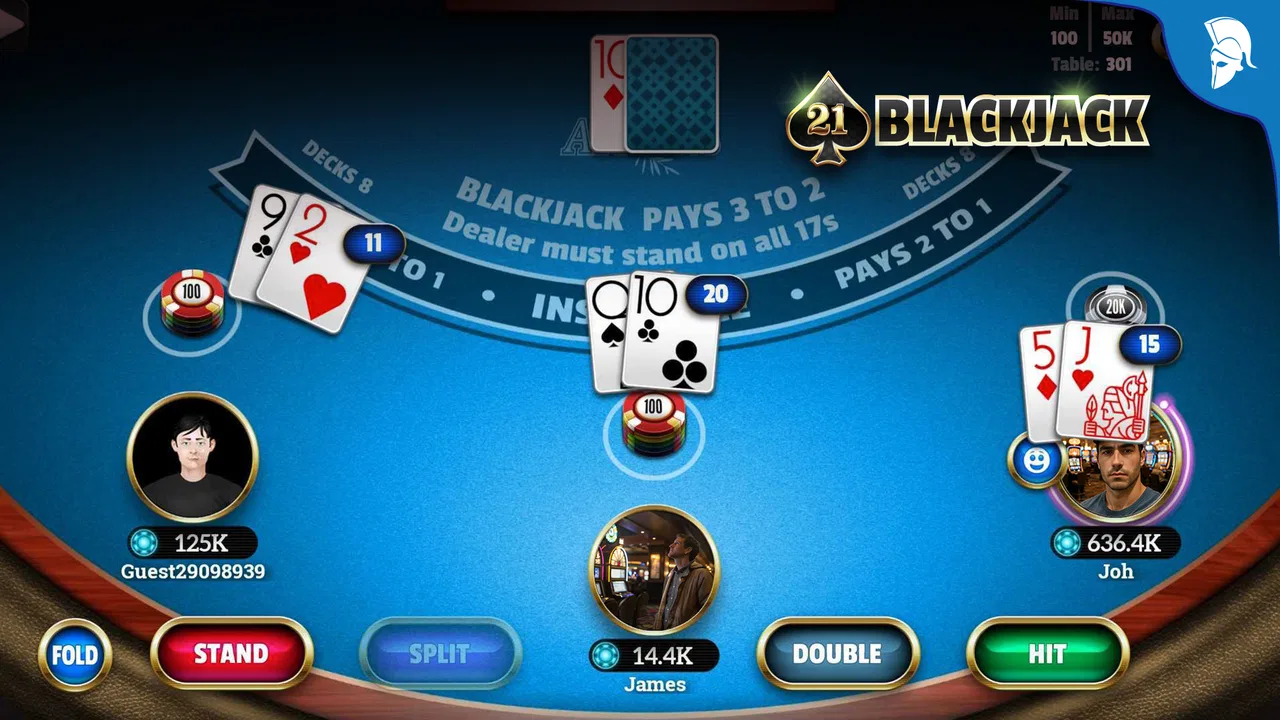
The first sessions are appealing because the central decision is immediate. I can look at my hand, consider the dealer’s visible card, and decide whether to take another card or stop. That rhythm makes the game suitable for small gaps in the day: a few minutes while waiting for an appointment, a quiet coffee break, or a short wind-down before bed. I do not need to remember a story, arrange a team, or study a complicated control scheme.
You May Also Like

 Blood Strike: 2.5 Anniversary
Blood Strike’s Loadouts Turn Every Drop Into a Tactical Gamble
A close look at Blood Strike’s custom loadouts: how fast access to signature weapons reshapes its battle royale rhythm, rewards preparation, and narrows the gap between fights.

 Pandora - Music & Podcasts
Pandora’s Music Is Easy to Start, but Harder to Recover
Pandora’s strength is its low-effort path from a seed to a station. Its weak spot is how much confidence it asks you to place in connection, setup, and quiet recovery.

 8 Ball Pool
 Is Built on Rivalries, Rematches, and Routine
A close look at the rivalries, rematches, shared routines, and unanswered safety questions that turn a quick pool match into a persistent mobile community.

 Samsung Music
’s Quiet Strength Is Playing What You Already Own
Its reach comes less from spectacle than from dependable access to a personal library. That simplicity is both the app’s strongest retention engine and its ceiling.

 AccuWeather: Weather Radar
AccuWeather Review: A Quick, Clear Forecast for Everyday Decisions
For everyday plans, the best forecast is the one you can understand quickly. AccuWeather makes rain timing, radar, and local conditions easy to act on, with a few trade-offs.

 Hill Climb Racing
Why Hill Climb Racing Still Turns Crashes Into One More Run
A tiny car, a bumpy hill and one more upgrade: Hill Climb Racing keeps resurfacing because its simple chaos makes every near-miss feel personal.
More From Our News Desk



That simplicity is also the app’s strongest advantage over many modern mobile card games. Instead of surrounding blackjack with a large collection of side systems, the focus stays on the hand in front of me. For a player who already knows the basic objective, the opening experience is almost frictionless. For a newcomer, the familiar target of reaching 21 without going over provides a clear reason to keep trying.
During the first week, I would recommend treating the game as a decision practice rather than as a way to chase a result. A good hand can still lose, and a cautious choice can still be punished by the next card. Focusing on the quality of the decision makes the short rounds more satisfying and reduces the temptation to judge every hand emotionally. That matters in a casino-themed game, especially when the excitement of a win can encourage careless follow-up choices.
The free entry point helps with that trial period. I can install the game and decide whether its pace suits me without paying upfront. However, the presence of in-app purchases ranging from $0.99 to $199.99 per item changes how I would approach it. I would not treat the purchase system as part of the entertainment plan. I would first play without spending, set a personal limit if I ever chose to buy anything, and avoid making a purchase immediately after a losing streak.
The Teen content rating is another reason I would frame the app as a game of simulated casino-style decisions rather than as a harmless toy for every age group. Parents deciding whether it belongs on a shared device should consider the theme and the purchase options together. A younger player may understand the card rules but not the difference between a virtual casino experience and real-money gambling. That distinction is worth explaining before handing over the device.
Small habits that improve the opening experience
One useful habit is to decide in advance how long a session will last. Blackjack rounds are short enough to make “one more hand” feel harmless, yet that phrase can easily turn a five-minute break into a much longer session. I prefer a fixed stopping point, such as ending after a timer or after a small number of hands, rather than stopping only when the balance or results feel satisfying.
A second habit is to separate learning from chasing. If I am still getting comfortable with the rules, I pay attention to why I chose to hit or stand and accept that the outcome will sometimes make the choice look bad. This is more useful than changing strategy after every unlucky card. The app’s uncomplicated format makes that self-review possible because there are not many unrelated mechanics competing for attention.
A third tip is to keep the game in its proper place on the phone. It works as a compact diversion, not as a replacement for a full card table with friends. If I want conversation, bluffing, or a shared competitive atmosphere, a multiplayer card app or a physical deck is a better fit. If I want a thoughtful solo puzzle, a strategy card game with deck construction will usually offer more variety.
What remains after the novelty fades
After the first month, the question becomes whether the basic blackjack loop continues to provide enough tension. For me, the answer depends heavily on what I want from a mobile game. The app has recurring value when I enjoy the small uncertainty of each hand and like making quick choices without committing to a long session. It has much less recurring value if I need unlockable content, changing challenges, a campaign, or a visible sense of personal development.
Blackjack naturally has repetition built into it. The rules can be satisfying precisely because they stay stable, but that stability also limits the number of surprises. Once the opening excitement has passed, I notice the repeated structure more clearly: receive cards, judge the situation, choose a response, then begin again. Players who enjoy refining discipline within a fixed system may appreciate that loop. Players who need constant novelty may quickly move on.
This is where the app compares interestingly with ordinary alternatives in the card category. A solitaire game usually offers a calmer puzzle and may feel more purposeful because each layout asks for a different arrangement. A collectible card game tends to provide deeper long-term planning, but it also demands more learning and often more time. A social card game offers human unpredictability that this solo casino format cannot reproduce. BlackJack 21 sits between those choices: faster than most strategy card games, more decision-focused than passive entertainment, but less varied than games built around changing decks or opponents.
I would keep it installed if I wanted a dependable five-minute activity with a familiar ruleset. I would not keep it as my only card game. Its best role is complementary: something I open when I want a quick decision loop, while using a different title when I want progression, social play, or a stronger challenge. That division of roles makes the app feel more useful and prevents me from expecting it to become something it was not designed to be.
The rating and install history suggest that many players find the basic format approachable, but popularity does not remove the central trade-off. A large audience can confirm that the game is easy to pick up; it cannot guarantee that every player will find enough variety for months. My own long-term interest would depend less on the number of available hands and more on whether I still enjoy the mental restraint required to stop at the right moment.
Who gets lasting value from it
I think the game suits three kinds of players particularly well. The first is someone new to mobile blackjack who wants a straightforward place to learn the flow of a hand. The second is a casual player who likes compact sessions and does not want a large, demanding game installed. The third is someone who enjoys probability-flavored decisions but prefers a familiar format over a complex strategy system.
It is a weaker choice for players who want real opponents, voice or text interaction, tournaments, or a community. It is also not the right choice for someone who finds casino imagery uncomfortable, who tends to spend impulsively in free-to-play games, or who needs a game to provide a clear sense of achievement over time. In those cases, a non-casino card puzzle or a fixed-price card game would be a healthier and more satisfying alternative.
An everyday example makes the distinction clear. Suppose I have ten minutes before leaving for work. I can open the game, play a few hands, and close it without learning a new system. That is a genuine strength. But if I am taking a long train journey and want something to occupy an hour, the repeated blackjack loop may begin to feel thin. I would choose a solitaire collection, a deck-building game, or an offline strategy title instead, depending on whether I wanted relaxation or depth.
Maintenance, fatigue, and spending discipline
The maintenance burden is relatively light in the sense that the game does not ask me to manage a large collection, remember a long quest chain, or return at a precise time to protect progress. That makes it easier to keep installed without feeling obligated. I can leave it alone for days and return without needing to relearn a complicated system. For a casual app, that is valuable.
There is another kind of maintenance, though: managing my attention and spending. Because a round ends quickly, the app can encourage repeated checking even when I am no longer having much fun. The most practical solution is to decide the purpose of each session before opening it. If I am filling a short wait, I stop when the wait is over. If I am practicing decisions, I stop when I become frustrated or start making choices automatically.
The purchase range deserves particular caution. The game is free to start, but optional items can cost from $0.99 up to $199.99 each. I would never make a large purchase simply to recover from a losing run, because that turns a casual card game into an emotional spending cycle. Anyone sharing the device with children should also use the platform’s purchase protections and explain that virtual resources are not a way to earn money.
Fatigue usually comes from repetition rather than from difficult controls. The first hands ask for attention because the result feels uncertain. Later, the same interface and decision pattern can become automatic. A useful way to delay that fatigue is to play in shorter sessions and avoid opening the app whenever I am merely bored. If I reserve it for moments when I genuinely want a quick blackjack round, it retains more of its original appeal.
I also find that losing streaks can distort the experience. Even when the rules are simple, a sequence of bad outcomes makes me question reasonable decisions. That is a sign to pause, not to increase the stakes or buy more of anything. The app is most enjoyable when I treat each hand as a separate event and accept that a sound choice does not guarantee a favorable result.
How it fits into a phone over time
The current version, 9.1.8, matters mainly because a maintained app is easier to trust as a regular casual game than one that feels abandoned. Still, maintenance is not only about version numbers. I judge whether an app deserves permanent storage by how often I naturally return to it, how quickly it starts a session, and whether its central activity remains pleasant after repeated use.
For this game, storage space is not the main concern; attention is. I would keep it on a secondary rotation rather than place it among the few apps I open every day. That is not an insult. Many good short-form games work better as occasional companions than as daily habits. The title earns its place when I want blackjack specifically, not when I am searching for the deepest or most varied card experience available on Android.
One practical workflow is to use it as a deliberate break between demanding tasks. I can play a limited session, then close it and return to work, instead of using it as background activity throughout the day. Another is to pair it with a personal rule that no purchase is made during play. If I ever want to spend, I decide later, away from the excitement of the table. These boundaries preserve the game’s casual character.
Players should also be comfortable with the fact that the app’s long-term appeal comes from the blackjack format itself. There is no reason to expect it to transform into a campaign, a social club, or a broad tabletop collection. If those are the features that would keep a game installed, choosing a different category from the beginning will save time and frustration.
My long-term verdict
After the novelty fades, BlackJack 21 remains a competent choice for quick, solo casino-style card sessions. I like its accessible rules, compact rhythm, and low learning barrier. Funstage has focused the experience on the central blackjack decision, which makes it easy to recommend to a friend who wants something familiar and immediately playable. The free starting point also makes trying it low-risk, provided the in-app purchase options are handled carefully.
My recommendation becomes more selective when the goal is lasting daily entertainment. The repeated hands do not offer the same variety as solitaire, the same human unpredictability as multiplayer cards, or the same long-term planning as a deck-building game. The Teen rating and casino theme also mean I would not present it as a general family game, especially on a device where purchases are easy to make.
The app earns lasting space as an occasional blackjack break, not as a complete card-game library. I would keep it installed for those moments when I want a short decision-focused session with no complicated setup. I would remove it if I stopped enjoying the basic hand-by-hand rhythm, began playing only out of habit, or felt pressure to spend after losing. Used with that awareness, it is a clean, approachable option in its narrow lane.
In the end, the best reason to download it is also the simplest: you want blackjack that can be started quickly and put down just as quickly. If that matches your routine, the game can remain useful well beyond the first week. If you are seeking progression, social play, or constant discovery, the initial appeal will probably fade sooner, and another kind of card game will deserve the permanent spot on your phone.
FAQs for BlackJack 21 - Online Casino
01Is BlackJack 21 - Online Casino free to play?
Yes, BlackJack 21 - Online Casino is free to download and play. However, the game offers in-app purchases that allow players to buy chips and other items to enhance their gaming experience. These purchases are entirely optional, and players can enjoy the game without spending any money.
02Can I play BlackJack 21 - Online Casino offline?
No, BlackJack 21 - Online Casino requires an internet connection to play. The game is designed to offer an online multiplayer experience, allowing you to compete against players worldwide. An internet connection ensures that all gameplay data is synced and that you can participate in real-time matches.
03What are the main features of BlackJack 21 - Online Casino?
BlackJack 21 - Online Casino offers a variety of features including multiplayer tables, daily bonuses, and tournaments. The app also provides interactive tutorials for beginners, a chat feature to engage with other players, and a leaderboard to track your progress and compete with friends globally.
04Are there any age restrictions for playing BlackJack 21 - Online Casino?
Yes, there are age restrictions. BlackJack 21 - Online Casino is intended for users who are at least 18 years old, as it simulates a gambling environment. The app mandates age verification to comply with legal and regulatory requirements, ensuring a responsible gaming experience.
05How do I ensure my account is secure in BlackJack 21 - Online Casino?
To keep your account secure, use a strong, unique password and avoid sharing your login details. The app supports account linking with social media accounts for easy recovery. Additionally, regularly update the app to the latest version to benefit from security improvements and bug fixes.
Pros
- Smooth and intuitive user interface.
- Realistic graphics enhance gameplay.
- Offers both single and multiplayer modes.
- Frequent updates with new features.
- In-app tutorials for beginners.
Cons
- Requires constant internet connection.
- In-app purchases can be pricey.
- Ads can be intrusive during play.
- Limited free chips for new users.
- Occasional connectivity issues.

BlackJack 21 - Online Casino
Gallery